
Things to Do Before Hiring a Concrete Driveway Contractor
Choosing to upgrade your home with a new entrance is a significant investment that requires careful vetting of the professionals involved. To ensure your project is completed with precision and durability, you must go beyond a basic price quote and dig into the technical details of the installation process. The following questions will help you identify a qualified concrete driveway contractor who prioritizes quality craftsmanship and long-term structural integrity.
Verifying Professional Credentials and Insurance Coverage
The first step in any home improvement project is ensuring that the individual or company you hire is legally authorized and protected to perform the work. You should ask to see a current copy of their state-issued contractor’s license and proof of both general liability and workers' compensation insurance. A reputable driveway contractor will have no hesitation providing this documentation, as it protects you from financial liability in the event of an accident or property damage. Furthermore, verify if they are bonded, which provides an extra layer of consumer protection should the business fail to complete the project as specified in the contract. Without these safeguards, you risk significant legal and financial headaches that far outweigh any potential savings from a "handyman" rate.
Reviewing Past Projects and Local References
Experience in the specific climate and soil conditions of your region is vital for a successful pour. Ask for a portfolio of recent local projects and, more importantly, a list of references from jobs completed three to five years ago. This allows you to see how their work holds up after several freeze-thaw cycles and consistent vehicle traffic. When speaking with references, ask about the contractor’s punctuality, communication style, and how they handled any unexpected issues during the pour. A seasoned concrete driveway contractor will be proud to show off their aging work because they know their techniques stand the test of time. Seeing a project that is a few years old gives you a much better perspective on quality than a fresh pour that hasn't had time to settle or crack.
Understanding the Sub-Base Preparation Process
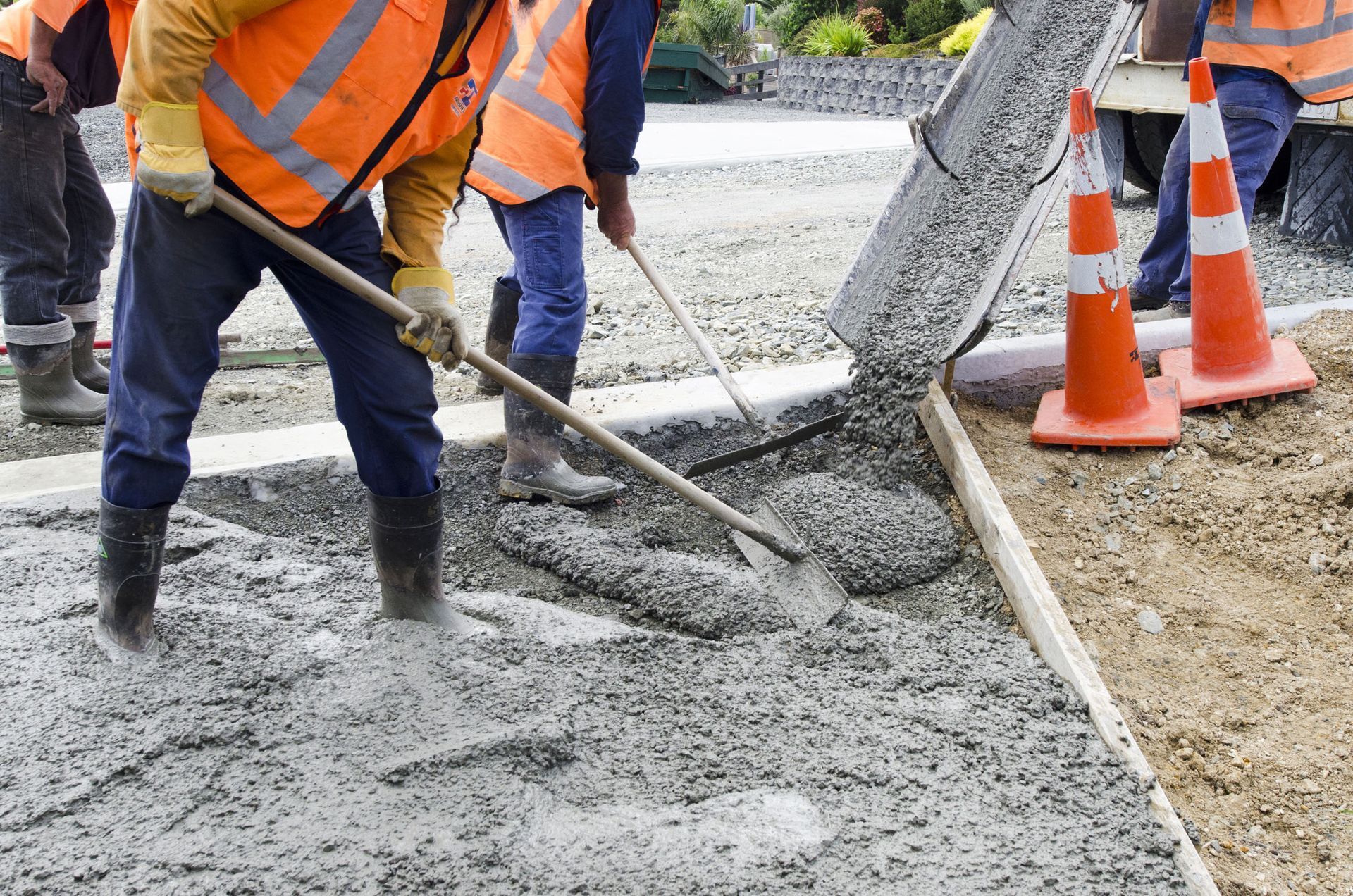
The longevity of your driveway is determined almost entirely by what lies beneath the visible surface. Ask specifically how they plan to prepare the ground, including the depth of excavation and the type of aggregate used for the sub-base. A solid foundation prevents the concrete from sinking, shifting, or cracking prematurely due to soil movement. According to HomeGuide, most concrete driveways last 30 to 40+ years, but achieving this lifespan requires a properly compacted base of crushed stone or gravel. If a contractor suggests pouring directly onto dirt or failing to use a mechanical compactor, it is a major red flag that the driveway will fail within a few seasons.
Inquiring About Concrete Mix Specifications
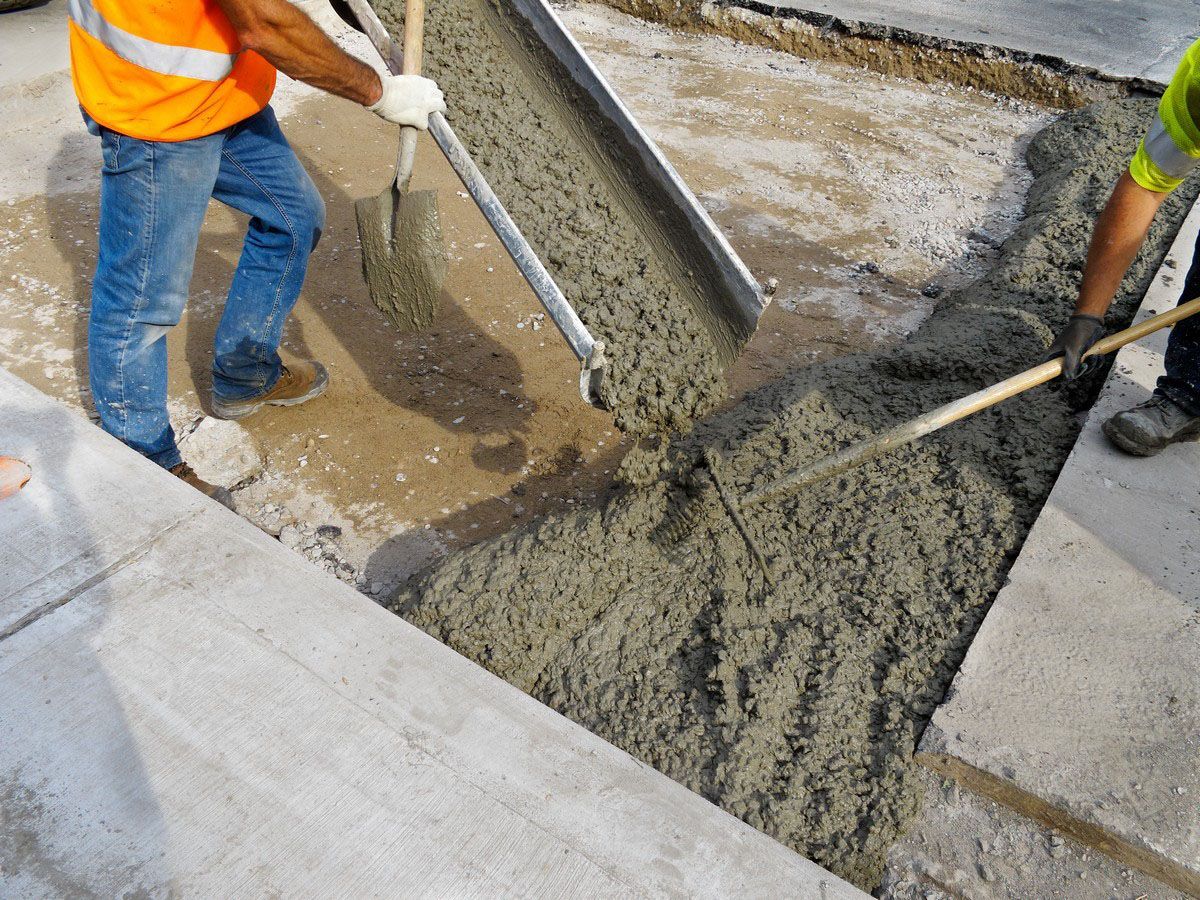
Not all concrete is created equal, and the specific "recipe" used for your driveway must be suited for heavy loads and local weather. Ask about the "PSI" (pounds per square inch) rating of the mix they intend to order; for residential driveways, a minimum of 4,000 PSI is generally recommended. Additionally, ask if they will be using an air-entrained mix, which contains microscopic bubbles that allow the concrete to expand and contract without scaling or spalling during winter. A knowledgeable concrete driveway contractor should be able to explain the water-to-cement ratio and why their chosen mix is superior for your specific application. Using a cheap or overly watered-down mix will lead to a dusty, weak surface that wears away quickly.
Determining the Reinforcement Methods Used
While concrete is excellent at handling compression, it needs help with tension, which is why internal reinforcement is a standard industry practice. Ask whether they plan to use rebar, wire mesh, or fiber reinforcement—or a combination of these—to strengthen the slab. Rebar is often the gold standard for preventing heavy vehicles from causing the slab to separate, while fiber mesh can help reduce plastic shrinkage cracks on the surface. Ensure the contractor explains how they will "chair" or lift the reinforcement so it sits in the middle of the slab rather than sinking to the bottom where it becomes useless. Proper reinforcement is a hallmark of a high-quality installation that prevents minor cracks from becoming major structural failures.
Establishing the Joint Placement Strategy
Cracking is a natural part of the concrete curing process, but a skilled professional knows how to control where those cracks happen. Ask for a detailed plan of where the control joints will be placed and how deep they will be cut. Typically, joints should be spaced at intervals no more than 2-3 times the thickness of the slab in feet (for a 4-inch slab, every 8-12 feet). You should also ask if the joints will be hand-tooled while the concrete is wet or "saw-cut" the following day. A professional concrete driveway contractor uses these joints to create "pre-planned cracks" that follow straight lines, keeping your driveway looking neat and organized rather than having jagged fissures running across the center.
Discussing the Finishing and Curing Procedures
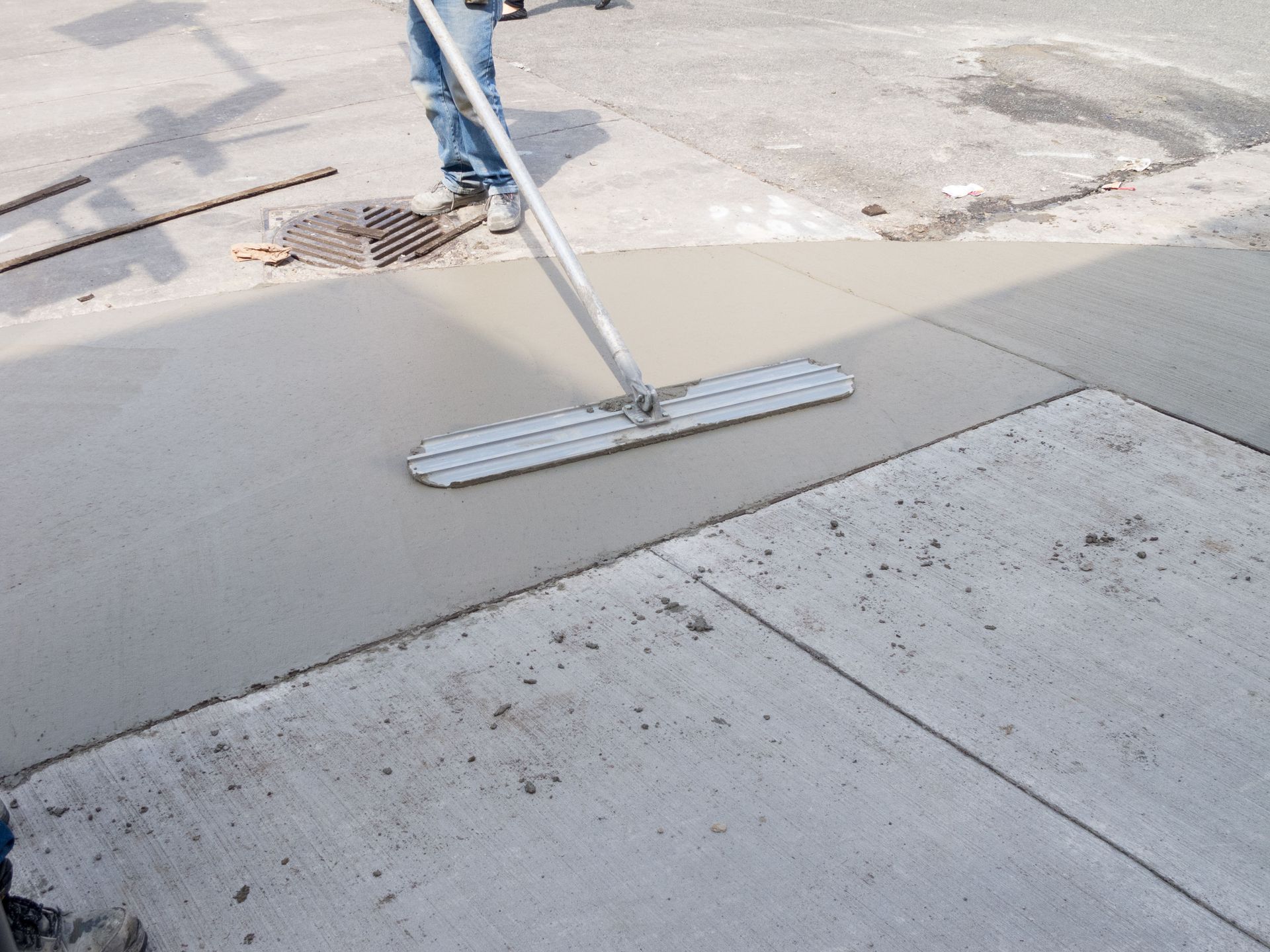
The way the surface is treated in the hours and days after the pour will dictate both its beauty and its strength. Ask what type of finish they recommend; a broom finish is standard for driveways to provide slip resistance, while decorative stamped finishes offer a more high-end look. Beyond aesthetics, ask about their curing process and whether they apply a curing compound or recommend "wet curing" to keep the moisture in the slab. Proper curing allows the concrete to reach its maximum design strength; skipping this step leads to a brittle surface prone to dusting and cracking. You want a concrete driveway contractor who understands that the job isn't finished the moment the truck leaves the site.
Clarifying the Project Timeline and Weather Contingencies
Concrete is highly sensitive to temperature and moisture, so you need to know how the contractor handles the unpredictability of the outdoors. Ask how long the total project will take from excavation to the final pour, and how long you must wait before walking or driving on the surface. More importantly, ask what their policy is if it rains unexpectedly during the pour or if the temperature drops below freezing at night. A professional should have plastic sheeting on hand to cover a fresh pour and should be willing to reschedule if the forecast looks threatening.
Evaluating the Total Cost and Payment Schedule
A detailed, written estimate is the only way to avoid "hidden" fees that can derail your budget mid-project. The quote should break down the costs for demolition of the old driveway, hauling away debris, materials, labor, and any permit fees required by the city. Be wary of any concrete driveway contractor who asks for the full amount upfront or insists on a cash-only deal. A standard payment schedule usually involves a small deposit to hold the date, a payment when materials are delivered or excavation starts, and a final payment once the work is completed to your satisfaction.
Investing the time to ask these ten critical questions ensures that you hire a professional who values quality as much as you do. By focusing on sub-base preparation, reinforcement, and proper curing, you can feel confident that your new entrance will stand the test of time. A high-quality driveway not only boosts your home’s curb appeal but provides a durable surface that will serve your family for a generation. Contact McPherson Concrete Construction, Inc. today to get started!
Share On: